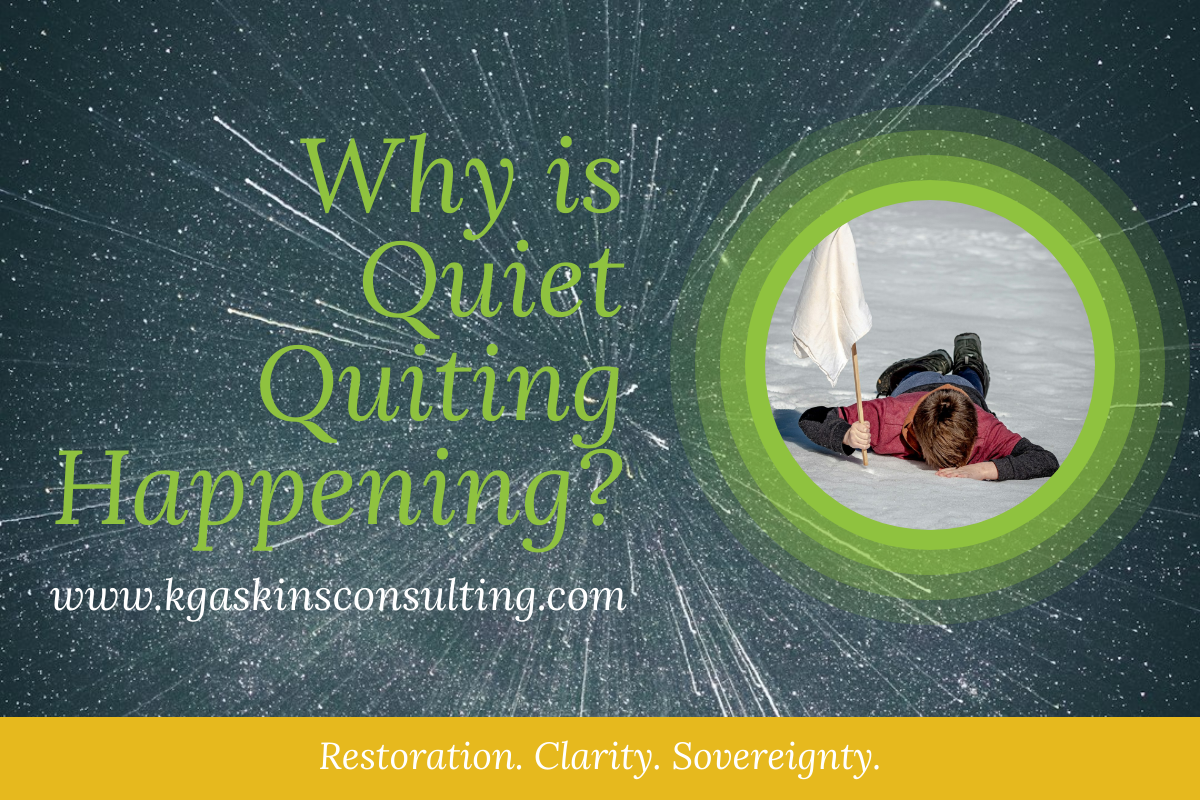
If you open any major business publication, quiet quitting is framed as a trend driven by disengaged employees doing the absolute bare minimum. Pundits debate workplace ethics, productivity metrics, and return-to-office mandates, viewing the issue entirely through the lens of corporate output.
However, this commentary misses the fundamental reality.
Quiet quitting is not a wave of laziness or a sudden loss of work ethic. Quiet quitting is a biological response to your system running on high gear for too long. It is an effort to take back control, protect your energetic capacity, and establish clear operational boundaries when work has pushed your mind and body past their natural limits.

Moving Beyond the Efficiency Trap
When workplace demands consistently exceed human capacity, sustained physical stress takes over. Eventually, the mind and body reach a tipping point. What mainstream management labels as disengagement is actually a protective mechanism. When your internal system is continuously overloaded without adequate recovery, it naturally pulls back to preserve core biological function.
Calendar optimizations and workflow hacks always fail when your physical baseline is depleted. Biology precedes logic. Instead of crashing completely, individuals resort to quiet quitting to reclaim agency over their time, set physical buffers around their attention, and prevent structural collapse.
Viewing quiet quitting as a productivity problem ignores an absolute truth: you cannot keep your life and business standing if you are running on empty.
Exploring Quiet Quitting Through a Coaching Lens
In my coaching practice with high-capacity leaders, quiet quitting is never judged, nor is it treated as something to fix with quick fixes.
My philosophy is grounded in client autonomy. You are in control of your career, health, and boundaries. Rather than telling you what to do, we explore the underlying signals your body and work environment are giving you.
If you are considering quiet quitting or are already doing so, we examine three central questions during our sessions:
What is your physical baseline telling you?
Why does pulling back feel like the necessary approach right now? We look at where your energy is leaking and identify the structural design flaws in your current daily rhythm.
What do clear boundaries look like for you in practice?
Does it mean stepping back from late-night communications, declining uncompensated obligations, or working strictly within established operational limits? Defining specific parameters transforms passive withdrawal into clear boundary management.
How does this decision feed into your overall life and health vision?
Is quiet quitting a temporary defense mechanism, or is it a signal that your work structure requires deeper alignment with your long-term well-being?

From Passive Reaction to Self-Holding Systems
Quiet quitting does not have to be a permanent state of limbo. It can serve as a diagnostic baseline that informs your next strategic move. Depending on your primary goals, we structure our coaching work to meet you where you are:
Micro Sessions
Ideal for immediate clarity, laser-focused boundary setting, or navigating specific workplace friction. These targeted sessions help you gain real-time insight into why your system feels overloaded and how to improve constant availability.
Signature Programs
If your goal involves a structured transition, such as intentionally reducing work hours or rebuilding your operational boundaries, we address it systematically. Together, we set, test, and evaluate the plan to ensure your health, home, and career hold their own weight without relying on continuous adrenaline.
What Is Your Ultimate Goal?
Quiet quitting is rarely the destination. It is a symptom of a deeper need for structural realignment. The fundamental question is not just how to do less at work, but what your ultimate vision is for your life and health.
When you move from reactively pulling back to intentionally designing operational boundaries, quiet quitting ceases to be a coping mechanism and becomes the catalyst for building a career that genuinely supports your life.
Are you ready to stop running on empty and build structures that hold their own weight? Book a clarity call today to explore how we can set, test, and execute a plan tailored to your health and leadership goals.